Focus
Surface the next useful action alongside its evidence.
Mega Bank · Product design
One operational workspace.
From identity review
to the exception that needs a decision.
01 · The operational challenge
Banking operations cross teams, records and systems. A verification case, a company onboarding request and an unsettled payment need different evidence, but the operator still needs to answer the same questions: what happened, who owns it and what should happen next?
Mega Bank Back Office brings those questions into one operational workspace. The supplied prototypes explore individual and corporate review, documents, legal relationships, signing rules, payment exceptions and team oversight.
Surface the next useful action alongside its evidence.
Keep the case, its history and the people involved connected.
Make ownership, reasons and review stages visible.
02 · Prioritizing work
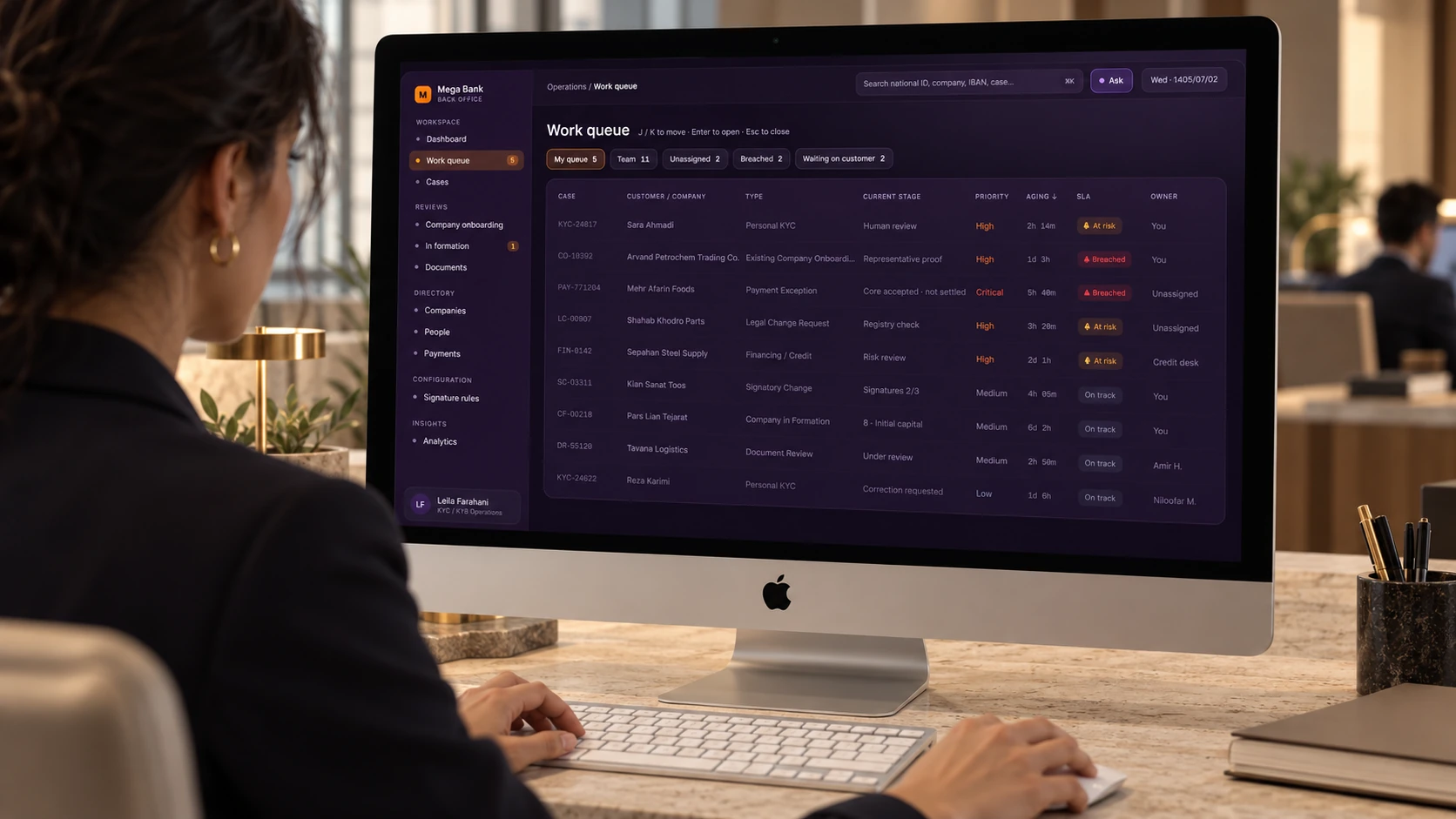
The queue distinguishes assigned, unassigned, escalated, returned and waiting work. Priority, case age, service-level status and the next action sit beside the case instead of being scattered across separate views.
Operator and team-lead dashboard layouts support different questions: what should I resolve next, and where is the team accumulating risk? Keyboard navigation and search help frequent users move between cases.
03 · Reviewing identity
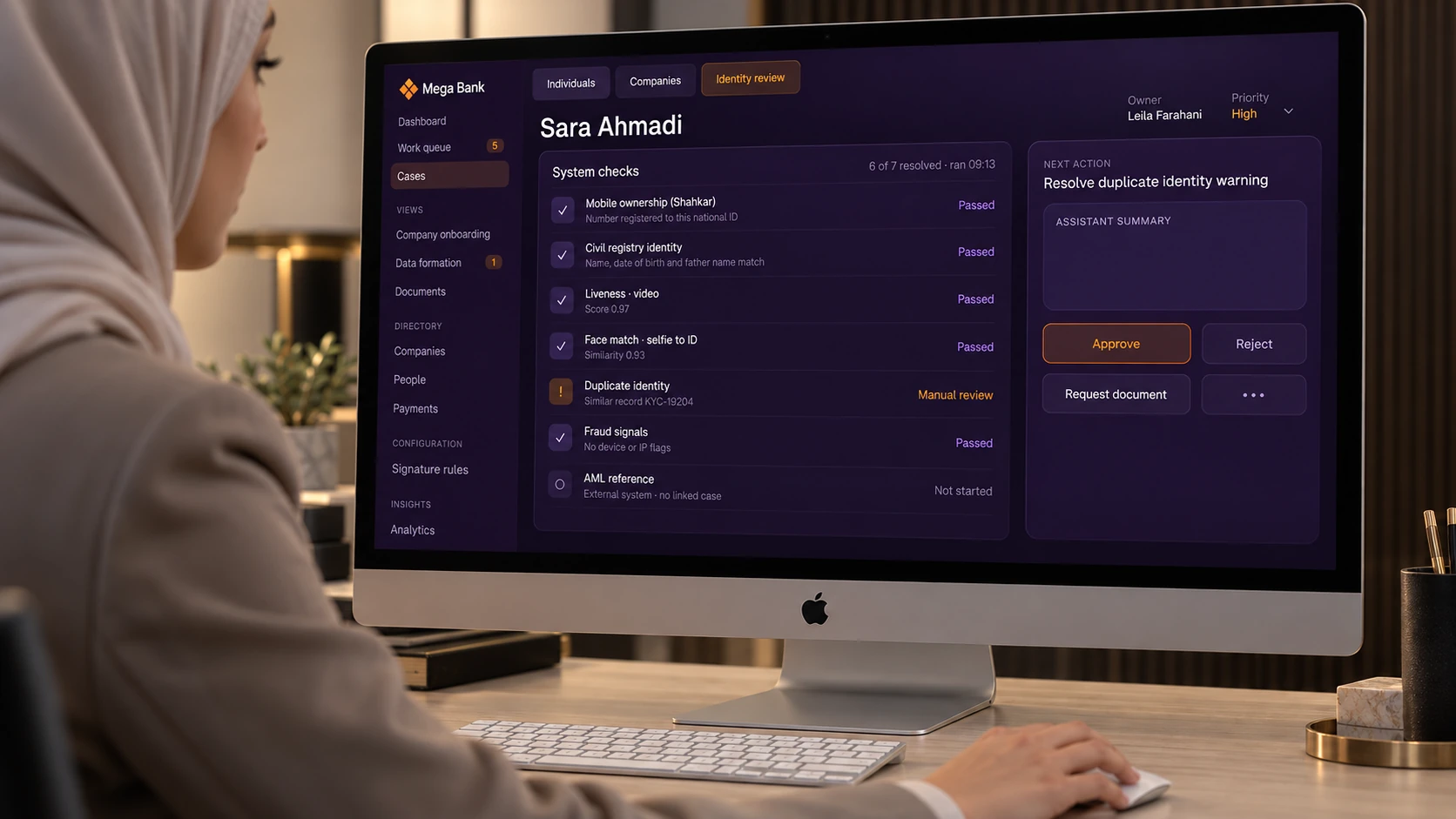
The identity review separates automated check results from the human decision. Duplicate identity, document quality and unresolved signals remain visible beside the applicant's case history.
Approval, a correction request, rejection and escalation are distinct paths. Reasons, customer-facing instructions and internal notes give the next person enough context to continue the review.
04 · Corporate onboarding
Company onboarding compares submitted information with registry evidence. Differences and expired records are brought into one review surface, so a reviewer can select the relevant fields and request a specific correction.
The wider model connects representatives, directors, documents, positions and signing authority. A separate company-in-formation journey makes account opening and capital-related stages legible without treating a new company like an already active business.

05 · Signature and withdrawal rules
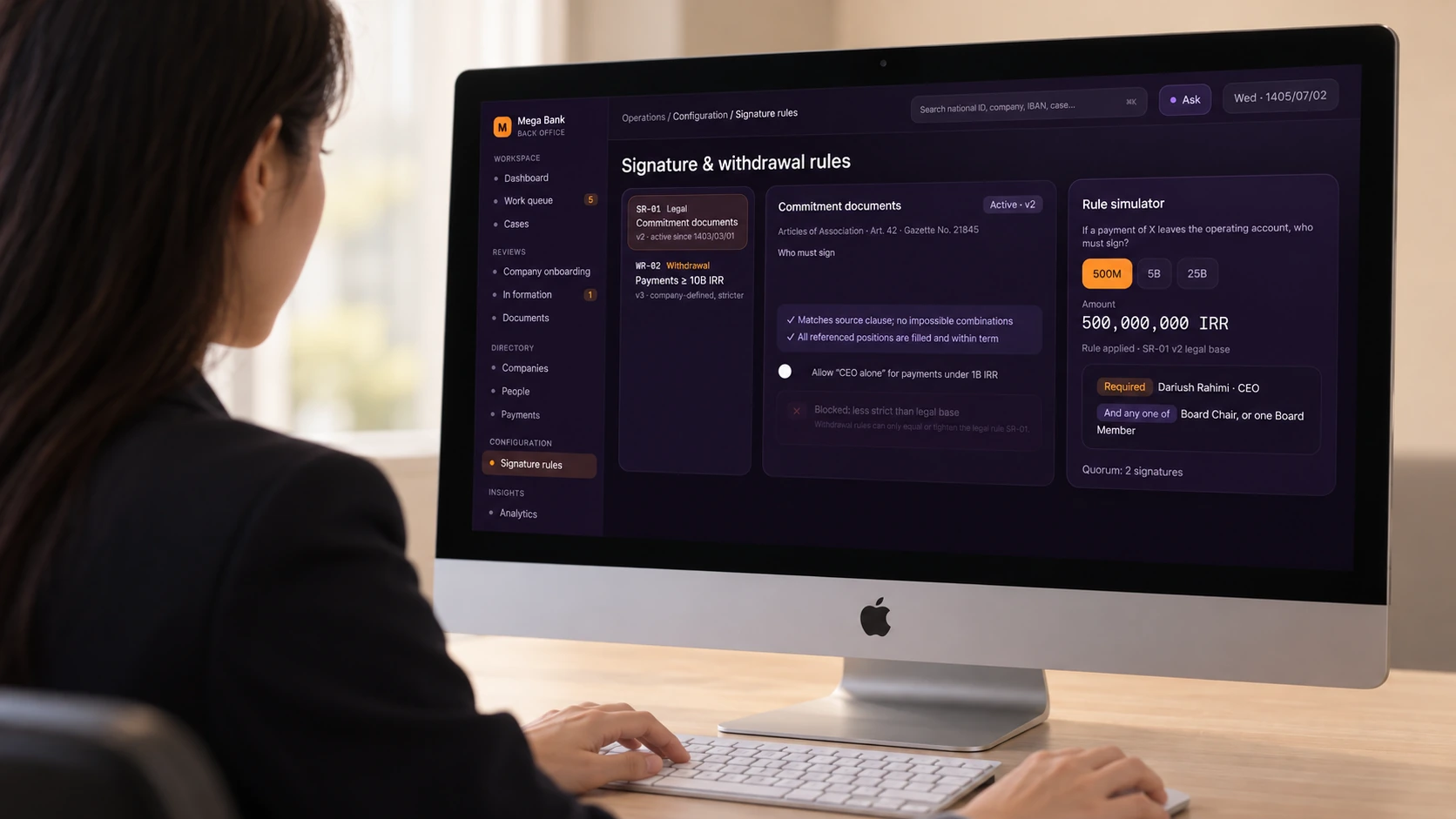
A signing rule needs to explain who can authorize an action, under which conditions and against which supporting documents. The prototype presents role combinations, thresholds and rule versions together.
A rule simulator explores the result before a change is activated. Maker and checker roles, document validity and the audit trail remain part of the same decision model.
06 · Payment exceptions
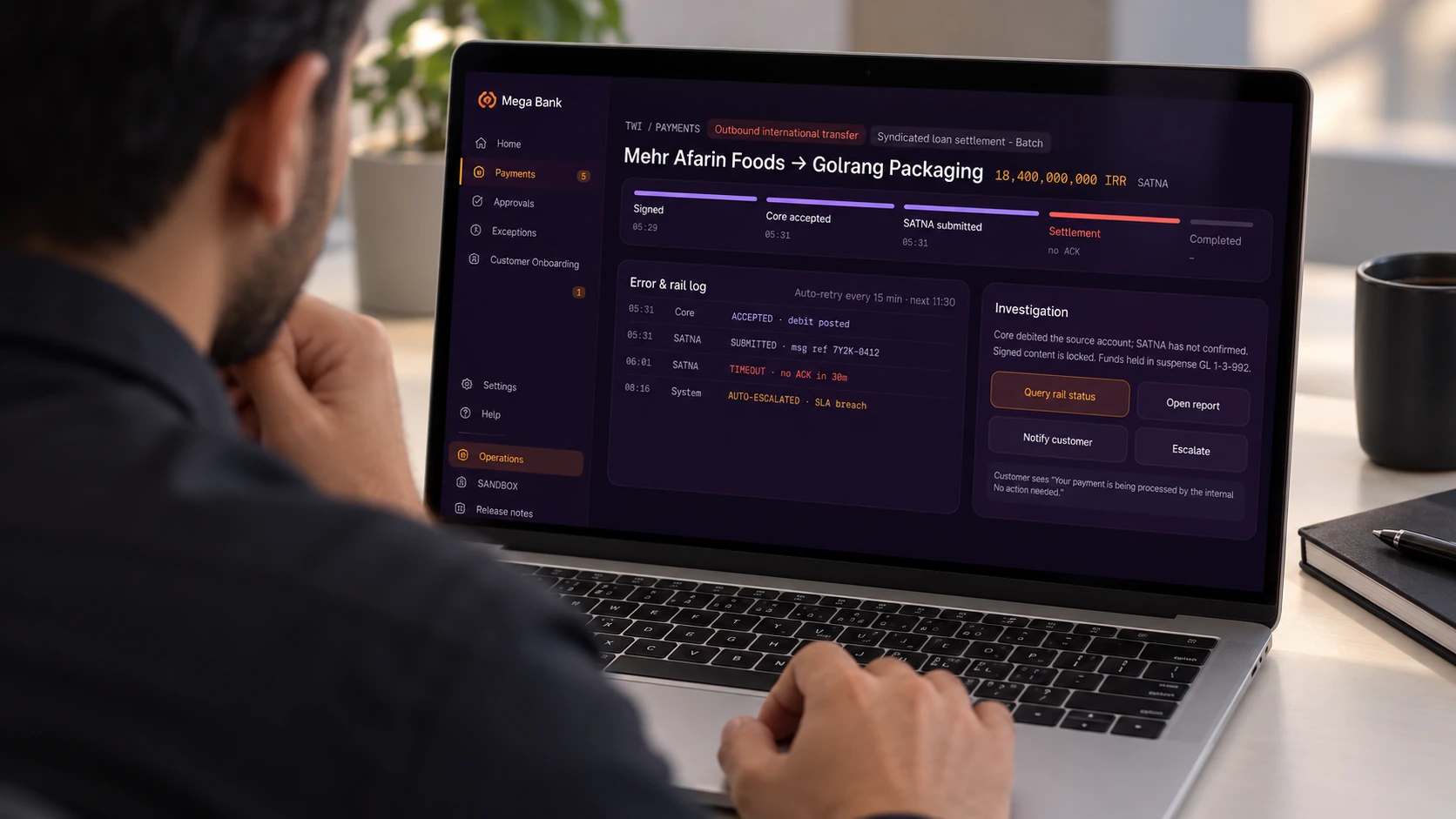
A payment can be accepted by one system while still waiting for confirmation from another. The exception view separates signing, core acceptance, rail submission and settlement instead of reducing the whole journey to one ambiguous status.
The event log sits beside investigation actions: query the rail, open a repair ticket, update the customer or escalate the case. The supplied prototype simulates these actions; it does not connect this presentation to a live banking system.
07 · Explore the supplied interfaces
Explore the original English dark interface or the supplied Persian dark and light variants. Switch views, open a case and follow its evidence and next actions.
The interfaces are interactive design prototypes. Operational records, statuses and metrics shown inside them are prototype content, not verified production outcomes.
Interactive design exploration. No real accounts, payments or banking services are connected.
08 · Finding context
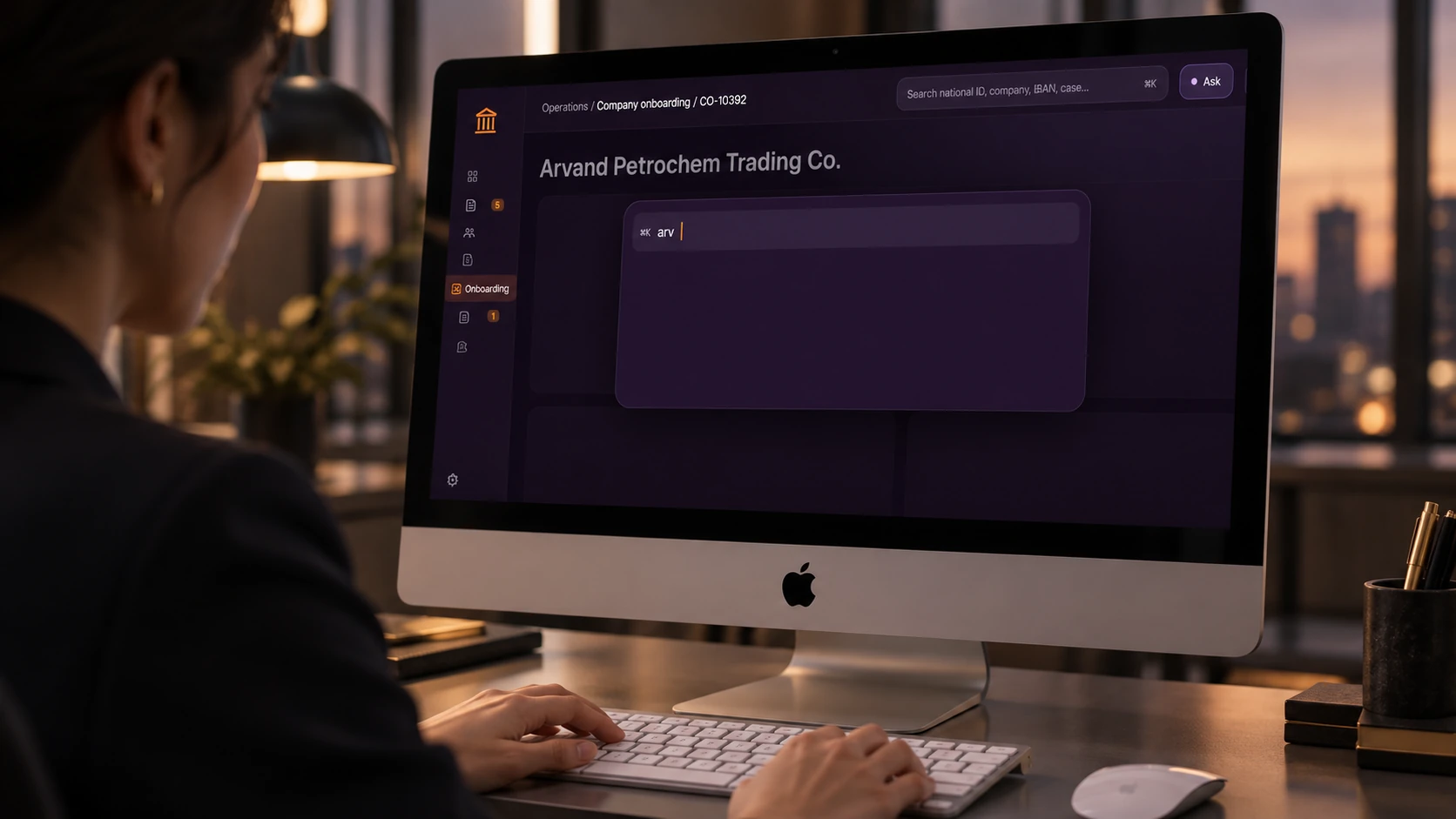
Search and the command palette provide a direct route into the workspace. Related people, companies and tasks keep the reviewer close to the context behind a decision.
The source also explores a contextual assistant and management analytics. These are interaction explorations; no live AI service, production integration or measured performance improvement is claimed here.
09 · What the work demonstrates
The design connects work allocation, evidence review and exception handling through one recognizable interface. Dark and light surfaces, Persian and English variants and explicit state changes make the system tangible across its supplied explorations.
Validation should examine task completion, evidence comprehension, correction quality, handoff continuity and mistaken actions. The supplied analytics values illustrate a dashboard; they are not presented as research results or improvements achieved by this work.
Can an operator identify the owner, current state and next action?
Can a reviewer explain why a decision is allowed or blocked?
Can another team member continue the case from its history?
Product design & art direction · Alireza Jelodar
Original interfaces and walkthrough · Mega Bank Back Office
Apple-device scenes · AI-generated visualizations based on the supplied interface.